The Role of Conveyor Belts in Mass Production and Scalability
November 22,2025
Go into any manufacturing plant, and the products seem to flow effortlessly from one station to the next. It's just an effortless material flow. Behind that flow is something not too thrilling in itself yet absolutely essential: conveyor belts. They've transformed manufacturing in ways most people don't fully appreciate.
What once required large teams working for hours now happens in minutes with better consistency. That's the real impact of good conveyor systems.
A Brief History
Henry Ford introduced the moving assembly line in 1913. This reduced car-building time from 12 hours to just 93 minutes. The real innovation wasn’t speed, it was cutting out unnecessary movement. Workers stayed in one spot, and the work moved to them.
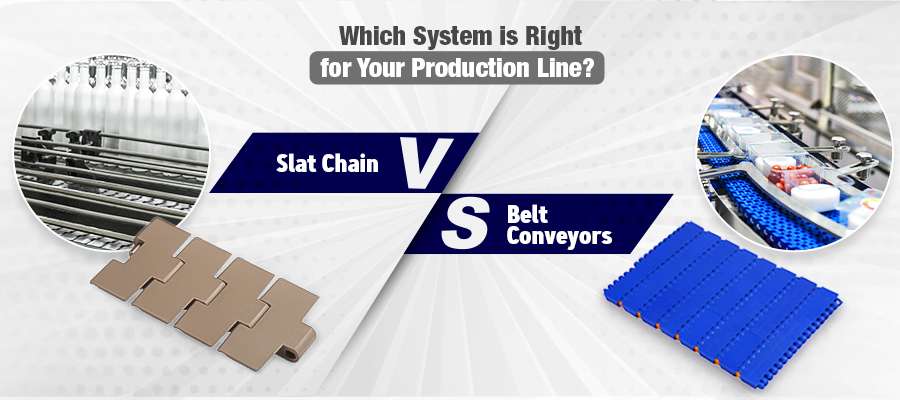
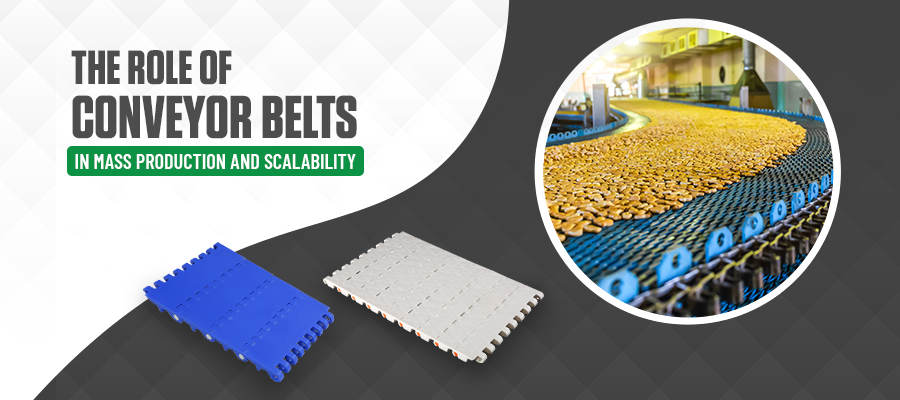
Modern conveyor systems have come a long way since then. Modular belts configure to any layout, while heavy-duty slat chains move loads that would damage standard belts. Components exist for practically every manufacturing need, from delicate electronics to heavy industrial equipment.
Scalability in Action
Growing a manufacturing operation means producing more, but not necessarily proportionally increasing costs. This is where conveyor systems become invaluable.
Now, think about a typical bottling operation. With just manual handling, it may process several hundred bottles per shift. But install proper conveyor systems and that same facility will process 50,000 bottles an hour. Same space, similar staffing, dramatically different output.
The advantage comes from consistent speed. Production doesn't depend on how fast or tired individual workers are. Multiple processes go on at once: bottles fill, cap, and label all at once along different points of the line. When you need to switch products or increase volume, modular systems reconfigure without major downtime. And conveyor infrastructure makes automation integration straightforward when you're ready to scale further.
Quality Through Consistency
High volume means nothing without quality control, to which conveyor systems contribute beyond mere transportation.
Precision speeds and positioning ensure uniform processing. Where batch recalls are catastrophic, like in food production and pharmaceuticals, such consistency is enormously important. Every product is treated the same.
Technology has dramatically improved. Sensors monitor continuous product flows, automatically detecting problems before they become major concerns. Food-grade systems include materials engineered for sanitation and easy cleaning. The manufacturing of sensitive electronic components requires static-dissipative belts.
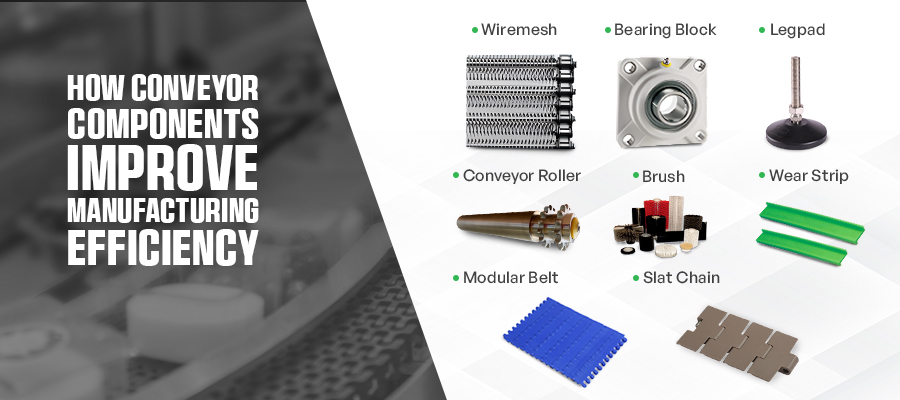
Component selection makes a real difference. Modular belts offer layout flexibility for space optimization. Slat chains handle applications that destroy standard belting. Supporting components side guards, wear strips, sprockets, all contribute to reliable long-term operation.
The Financial Case
Conveyor systems call for capital investment. The returns, however, justify the cost.
Labour requirements go down because fewer operators control larger volumes of production. Vertical systems take up less space, an advantage where land costs are high. Newer motors and drives use less power while offering better performance than their predecessors.
Maintenance has come a long way. The components that wear out are simply swapped out. Predictive monitoring keeps track of things such as belt tension, bearing temperature, and motor performance, finding failures before they create downtime. Every minute stopped in manufacturing costs money.
Industry 4.0 and Beyond
Manufacturing is constantly evolving and so are conveyor systems.
IoT sensors now provide real-time production data. Machine learning can adjust conveyor speeds based on downstream needs, reduce energy use, and prevent bottlenecks. Digital twin technology allows manufacturers to test changes in a virtual model before applying them in the real world.
Sustainability is driving innovation. Flexible designs accommodate both mass production and customization. Collaborative systems work safely alongside human operators, combining automation efficiency with human judgment.
Implementation Matters
Buying conveyor equipment is one thing, but implementing it effectively is quite another.
You need partners who understand the technology and application to your particular manufacturing process. Companies specializing in modular belts, slat chains, and comprehensive conveyor components bring practical experience that makes implementation successful.
Whether one is building new facilities, upgrading existing lines, or scaling operations, the approach matters. From initial planning through installation to ongoing maintenance, experienced partners ensure systems deliver expected performance.
For more information, please visit Spectra Plast India Pvt Ltd.
Recent Posts