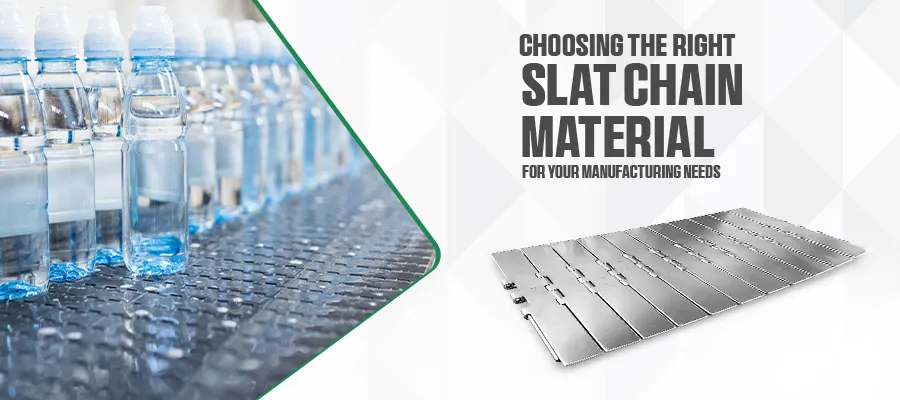
Choosing the Right Slat Chain Material for Your Manufacturing Needs
May 20,2026
Manufacturing operations depend on conveyor systems that work reliably. Slat chains form the backbone of these systems, moving products through production lines hour after hour. Choosing the wrong material creates problems. Equipment fails. Production stops. Costs escalate.
The material you select for slat chains affects performance, durability, maintenance requirements, and total operating costs. Understanding your options makes the difference between reliable operations and constant disruption.
Why Material Selection Matters
Slat chains face demanding conditions. Products sit on them. Friction builds as chains move. Temperatures fluctuate. Chemical exposure varies by industry. The material must handle all these stresses without degrading.
A slat chain failing mid-production halts everything. Bottling lines stop. Food processing shuts down. That downtime costs far more than selecting the right material upfront. Material choice also affects maintenance demands. Some materials require frequent cleaning. Others resist degradation. The right choice reduces maintenance time and extends service life.
Stainless Steel Slat Chains
The stainless steels, particularly those of types 304 and 316, exhibit superior corrosion resistance. The type 304 is suitable for many purposes and occupies an intermediate position among these. However, type 316 is capable of resisting higher amounts of corrosion. The stainless steel should be maintained properly. It helps prevent buildup. Proper maintenance increases their life span by a great deal. They are quite strong and can carry heavy loads at a fast speed.
Their demerits include high expenses in the first place and challenging maintenance procedures. Stainless steels are conductive to heat.
Plastic Slat Chains
Acetal copolymer and PEEK offer low-friction characteristics and minimal corrosive tendencies. Plastics chains are lighter when compared to metallic chains and lower the load on motors as well as reduce power consumption. They run quieter, improving working environments.
Corrosion resistance is inherent. No rust. No pitting. Food processing and pharmaceutical operations benefit. Self-lubricating properties reduce the need for additional lubricants, important in food applications where contamination matters.
Cost advantage exists. Quality plastic chains cost less than stainless steel. Total cost of ownership often favours plastic when maintenance is considered.
Limitations exist. Plastic chains have load limits below metal chains. Temperature limits exist too. Most plastics degrade above 80 to 100 degrees Celsius. Strong solvents or specific chemicals can damage plastics.
Combination Systems
Some applications benefit from hybrid approaches. Steel frames with plastic slats or metal chains with plastic components leverage advantages of both materials. Cost sits between pure options. Performance often beats individual materials for certain uses.
Industry-Specific Applications
Bottle plants need durable chains for wet, fast-moving situations. Plastic is better because of low cost and noise reduction. Food industry plants need high corrosion resistance and easy cleaning. Plastic is slightly superior due to low costs and maintenance ease.
Pharmaceutical industry needs Grade 316 stainless steel for utmost hygiene, though it is expensive. Automotive assembly requires steel chains for strength and precision. Chemical handling demands Grade 316 stainless or specialty plastics.
Temperature and Speed Considerations
Stainless steel handles temperature swings without property changes. Plastic chains have temperature limits. Know your process temperatures. Thermal cycling stresses plastic more than steady-state temperatures.
Heavy loads require stronger materials. Metal chains handle higher speeds more reliably. Plastic works well at moderate speeds. Calculate actual forces in your application and verify that materials handle these forces.
Making Your Selection
Start with your operating environment. What temperatures? What chemicals? What moisture exposure? Calculate load and speed requirements. Consider maintenance demands. Stainless steel requires more attention. Plastic needs less.
Evaluate cost over the entire service life. Initial price matters less than total cost including maintenance, replacement frequency, and downtime costs.
Consult with manufacturers like Spectraplast in Coimbatore. Their expertise guides selection for specific applications. Test if possible. Sample chains in your actual operating conditions reveal real-world performance.
The Bottom Line
Slat chain material selection affects reliability, cost, and maintenance. The right choice depends on your specific operating conditions. Careful analysis prevents poor selections that create ongoing problems. Invest time in material selection. The decision affects years of operation.
For more information, please visit Spectra Plast India Pvt Ltd.
Recent Posts