Slat Chain vs. Belt Conveyors: Which System is Right for Your Production Line?
February 11,2026
Every manufacturing operation has to make this choice eventually. Choosing between slat chains or belt. Yet it's not always clear which one it is.
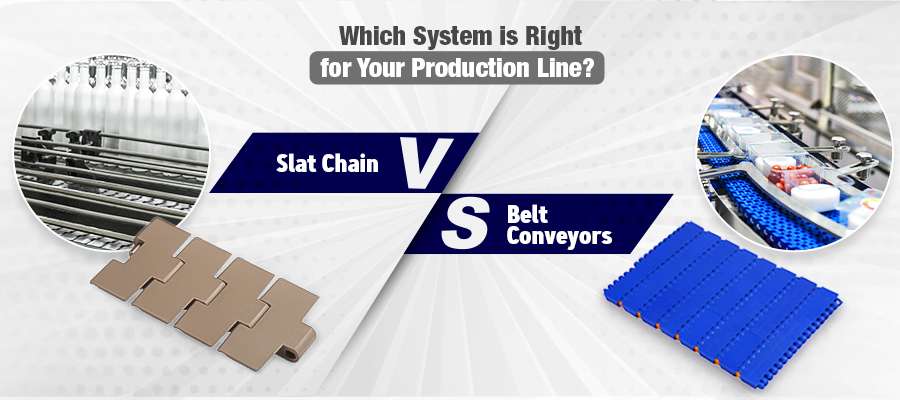
What Makes Them Different
Slat chains comprise rigid plastic or metal segments, connected in a series. Belt Conveyors are just that, a belt passing around rollers. Rubber, Fabric, Modular Plastic, etc. The belt flexes, which changes how it handles products.
That fundamental difference drives everything else.
When Slat Chains Work Better
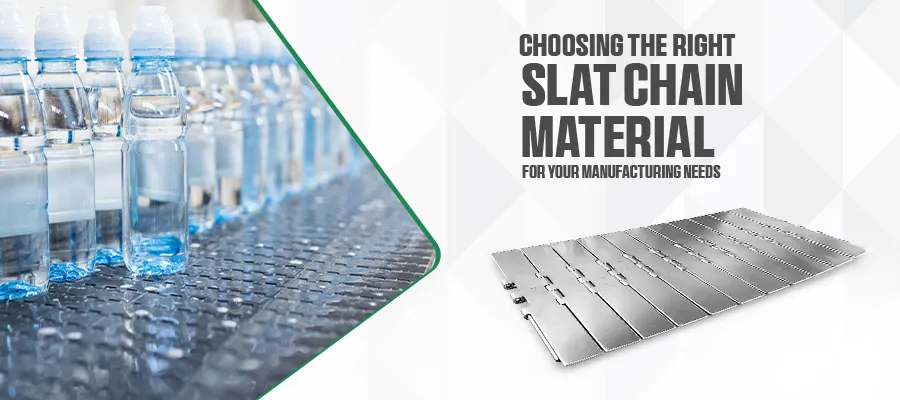
Heavy products sit better on slat chains. Glass bottles filled with liquid, metal cans, anything with real weight. The rigid surface doesn't sag under load. Products stay stable even when packed close together.
Bottling lines almost always use slat chains. When you're moving thousands of glass bottles per hour, you need that solid platform. Same goes for canning operations or any process where containers need to stay perfectly upright and positioned.
Temperature is another factor. Some production lines include heating or cooling zones. Many slat chain materials are able to withstand extreme temperature fluctuations that would ruin a standard belt. Are you using ovens, dryers, or freezers that are integral parts of your conveyor system?
The modularity also helps. A failed section can be replaced without bringing the whole machine to a halt. This can be very valuable in high-volume operations, where the cost of idling the system can be measured in the thousands of dollars an hour.
Where Belts Have the Advantage
Belts handle variety better. Different sized boxes, irregular shapes, delicate items, whatever you throw at them. The flexible surface adjusts to the product rather than the other way around.
Inclines are easier with belts. You can move products up or down at angles that would cause slat chains serious problems. Distribution centres and packaging operations often need this flexibility.
Belts also work well for lighter products. Personal care items, small food packages, anything that doesn't need the rigid support of slats. The gentler surface reduces impact and vibration during transport.
Cost plays a role here. Belt systems typically require less initial investment than slat chains. For operations with tighter budgets or less demanding applications, that difference matters.
The Maintenance Question
Slat chains have more components. More joints, more connection points, more places where wear happens. You'll spend time inspecting and replacing individual slats, checking wear strips, monitoring drive components.
But when something breaks, the fix is usually straightforward. Replace the worn part, maybe a few slats if needed, and you're running again. No need to source an entire new belt or shut down for hours.
Belts require different attention. Tension adjustments, tracking corrections, checking for wear or damage. When a belt fails, you typically replace the whole thing. But day-to-day, there are fewer individual components demanding attention.
Which approach suits your facility depends on your maintenance team and resources. Some operations prefer dealing with multiple small fixes. Others would rather handle fewer but larger replacements.
Cleaning Matters
Food and pharmaceutical manufacturers cannot compromise here. Contamination means shutdowns, recalls, regulatory problems.
Slat chains, particularly plastic ones, clean easily. Open designs let water and sanitiser flow through. Many systems handle direct pressure washing or automated cleaning. Nothing pools, nothing hides.
Belts vary. Smooth food-grade belts exist and work well. But traditional fabric belts trap debris and moisture. Even smooth belts can create cleaning challenges at the roller contact points. Modular plastic belts split the difference, offering easier cleaning than fabric while maintaining belt advantages.
Your sanitation requirements should heavily influence this decision. Talk to your quality and safety teams before specifying equipment.
Making the Decision
Make the decision based on your product. Consider its weight, nature, its temperature cleaning frequency and chemical exposure. It is also equally important to understand team’s capabilities, budget and a lot more. Be vary while choosing cheaper alternatives as the cost in the long run could increase. Companies like Spectra Plast work across industries and see what succeeds and what fails to give you a comprehensive solution as per your business needs.
For more information, please visit Spectra Plast India Pvt Ltd.
Recent Posts