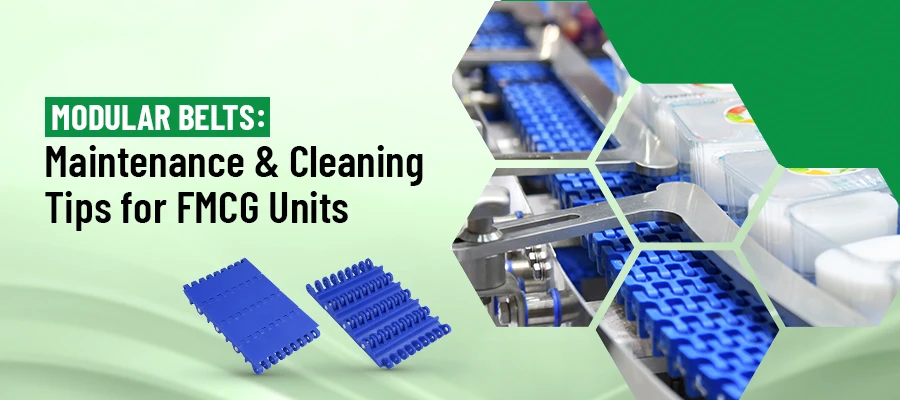
Modular Belts: Maintenance & Cleaning Tips for FMCG Units
April 27,2026
FMCG production lines run continuously in industries like bottling plants, food processing units, pharmaceutical packaging, dairy operations. Downtime costs money and equipment failure during peak production hurts worse.
Modular belts move products through these operations. When they fail, entire lines stop but is usually rectified by proper maintenance and cleaning which prevent most failures. Here is how to keep modular belts running reliably.
Daily Cleaning Protocols
Food contact applications require daily cleaning. Regulations demand it. Production efficiency benefits from it. Residue buildup causes belt tracking problems, increases friction, and harbours bacteria.
Dry debris removal comes first. Debris must be removed using brushes or pressurized air before wet cleaning since the process tends to transform the debris into paste form.
The wet cleaning step comes after that. Use the proper amount of detergents approved for food use. An insufficient quantity means the cleaning will not work, while an excessive amount means degradation of plastics. Be careful and follow instructions precisely.
Consider the water temperature. Most modular belts tolerate up to 80 degrees Celsius. Too high, and the belt can warp; too low, and cleaning efficacy drops. The correct temperature ensures fat and protein dissolution without harming any materials.
Lastly, rinse well. Debris attaches easily to residues left behind by the detergent, which impacts product surface contact.
Weekly Deep Cleaning
Weekly cleaning reaches areas daily cleaning misses. Hinge points accumulate debris. Belt undersides collect buildup. Drive sprockets gather residue.
Remove accessible sections for thorough cleaning when possible. Soaking loosens stubborn deposits. Brushing reaches into hinge areas where residue hides. This prevents accumulation that causes tracking issues and premature wear.
Check drain holes during deep cleaning. Many modular belt designs include drainage features. Blocked drains trap water and debris, creating hygiene problems. Clear them weekly.
Sanitise after cleaning in food applications. Use approved sanitisers at correct concentrations. Allow proper contact time. Rinse if required by sanitiser specifications.
Lubrication Requirements
Most modular belts run dry. Adding lubricants attracts dirt and creates hygiene issues in food applications. Belts designed for dry running perform best without lubrication.
Some applications may require particular types of lubrication. Always refer to the manufacturer's instructions to prevent damage to the plastic, accumulation of debris, or safety hazards.
The drive chains and sprockets must always be lubricated. Use only food-grade lubricants when lubricating systems in contact with food products. Too much lubrication will end up being transferred to the belts and the product itself.
Inspection During Cleaning
Cleaning time is inspection time. Look for wear patterns, damage, and developing problems while cleaning.
Check hinge pin wear. Excessive wear causes belt sag and tracking problems. Replace worn sections before they fail during production.
Examine belt surface condition. Cracking, gouging, or material degradation indicates problems. Surface damage harbours bacteria in food applications and suggests belt replacement needs.
Verify belt tension. Loose belts track poorly. Overtight belts stress drive components and cause premature wear. Correct tension allows slight sag between supports without excessive slack.
Inspect sprockets and drive components. Worn sprocket teeth cause belt damage. Misaligned drives create uneven wear. Address these issues before they damage belts.
Common Cleaning Mistakes
High pressure cleaning affects modular belts. The high pressure will force the water through the hinges and wash out the pins. Low pressure cleaning is preferred.
Strong cleaning solutions affect belt materials. Chemical solvents, acids, and bases can damage plastic components. Approved cleaning fluids should be used.
Incomplete drying encourages bacteria formation and rust. Allow complete drying before restarting production. This is especially critical in food applications.
Ignoring manufacturer guidelines causes problems. Belt materials vary. Cleaning requirements differ by application. Follow specific recommendations for your belt type.
Preventive Maintenance Schedule
Routine maintenance involves inspecting visually, cleaning manually, and conducting wet cleaning for food contact application. The time required ranges from 15 to 30 minutes, and it depends on the size of the conveyor.
Weekly maintenance tasks include proper cleaning, draining, and inspection. At least two hours a week have to be spent on maintenance.
Monthly maintenance includes adjustments for belt tightness, sprocket inspection, and alignment. This must be performed during the down times.
Quarterly maintenance will involve inspection, inspection for belt stretch, and replacement if required.
Documentation Matters
Record cleaning activities. Date, time, cleaning agents used, operator name. This documentation proves regulatory compliance and helps identify patterns.
Track belt performance. Note when sections were replaced, why replacement was necessary, and hours of operation achieved. This data guides future maintenance planning and helps optimise belt selection.
Document problems and solutions. When issues arise, recording what happened and how it was fixed prevents repeat occurrences and trains new staff.
The Bottom Line
Modular belt maintenance is not complicated. It requires consistency. Daily cleaning, weekly deep cleaning, regular inspection, proper documentation. Simple procedures executed reliably prevent most failures.
The alternative is unplanned downtime during production runs. Emergency belt replacement costs more than scheduled maintenance. Product contamination from dirty belts creates bigger problems than cleaning time.
Invest time in proper maintenance. Production lines stay running. Belts last longer. Food safety improves. The return justifies the effort.
For more information, please visit Spectra Plast India Pvt Ltd.
Recent Posts